
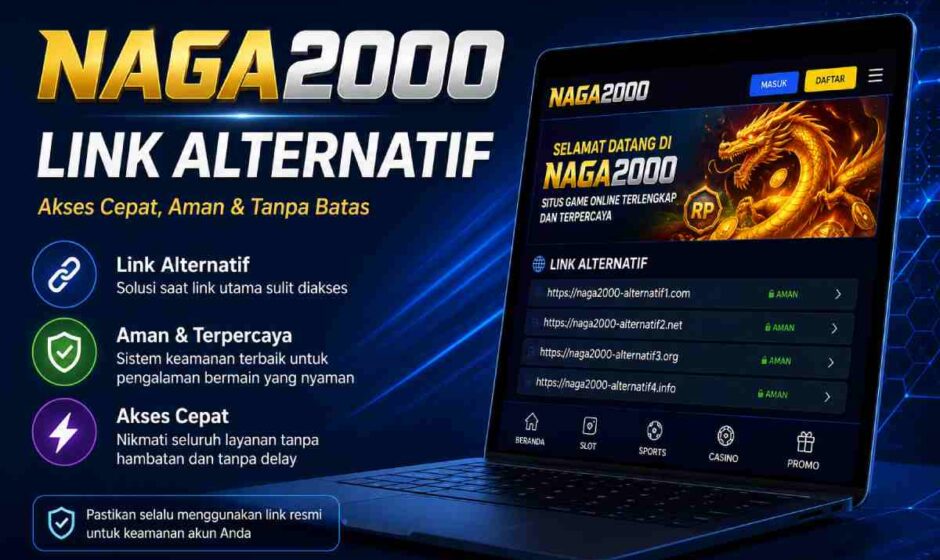



The words “naga2000 link alternatif” are among the search terms most commonly entered when Internet users find it difficult to access websites through their main domain name. More often than not, website owners implement different access addresses or duplicate domains to remain reachable by Internet users if their main web page cannot be accessed due to, for example, system maintenance, local web bans, or internet service provider issues.
This guide teaches us how to understand Naga2000linkalternatif and what advantages they offer, including what is, where to look for them, how they function, and what safety rules users must adhere to so as not to jeopardize their computers and personal information while Internet browsing; nothing related to commercial aspects but purely for informative guidance in Internet navigation.
What Is Naga2000 Link Alternatif?

Definition
Naga2000 alternatif is an alternate web address or mirror domain that sends the user to the Naga2000 website when the latter’s principal domain is inaccessible.
Alternative links are commonly used across many industries, including:
- Online services
- Educational portals
- Community websites
- Entertainment platforms
- Membership portals
Their primary purpose is maintaining website accessibility without changing the underlying service.
Quick Overview
| Feature | Description |
| Keyword | Naga2000 Link Alternatif |
| Purpose | Alternative website address |
| Used When | Main domain is inaccessible. |
| Common Reasons | Maintenance, DNS issues, ISP blocking, domain updates |
| Security Importance | Very High |
| Recommended Practice | Always verify the official domain before logging in |
Why Do Websites Use Alternative Links?

Many websites operate multiple domains for reliability.
Some common reasons include:
1. Server Maintenance
Temporary maintenance may require redirecting visitors to another domain.
2. Domain Changes
A website may migrate to a new domain while preserving existing services.
3. Technical Issues
Unexpected server outages can make the primary website unavailable.
4. Internet Routing Problems
Certain internet providers may experience temporary routing issues.
5. Load Distribution
High traffic volumes may require traffic to be shared across multiple domains.
Comparison Table: Main Domain vs Alternative Link
| Feature | Main Domain | Alternative Link |
| Primary Address | Yes | No |
| Backup Access | No | Yes |
| Same Website | Usually | Usually |
| Login System | Same | Same |
| User Account | Same | Same |
| Data | Shared | Shared |
| Security Depends On | Official Website | Official Website |
How Does an Alternative Link Work?
Alternative domains generally connect users to the same backend infrastructure.
The process usually works like this:
- User visits an alternative domain.
- The domain connects to the platform’s servers.
- Login credentials are processed.
- User accesses the same account.
- Information remains synchronized.
From a user’s perspective, the experience is often nearly identical if the link is legitimate.
Benefits of Alternative Links
Alternative links provide several advantages.
Continuous Access
Users can reach the platform even if the main website experiences downtime.
Better Availability
Mirror domains help reduce service interruptions.
Faster Connections
Some domains may perform better depending on regional network conditions.
Reduced Downtime
Multiple domains improve overall website reliability.
Benefits Table
| Benefit | Explanation |
| Better Availability | Multiple entry points |
| Improved Reliability | Reduced interruptions |
| Backup Access | Helps during outages |
| Faster Loading | Sometimes better routing |
| User Convenience | Less waiting during maintenance |
How to Verify a Genuine Alternative Link
One of the biggest concerns is distinguishing legitimate domains from fake or phishing websites.
Before entering any personal information:
- Check the URL carefully.
- Ensure the domain spelling is correct.
- Look for HTTPS encryption.
- Verify that the security certificate is valid.
- Avoid clicking links from unsolicited messages or unknown social media posts.
- If the service publishes official announcements, use only links listed there.
Verification Checklist
| Security Check | Recommended |
| HTTPS Enabled | Yes |
| Correct Domain Name | Yes |
| Secure Certificate | Yes |
| No Spelling Errors | Yes |
| Trusted Source | Yes |
| Suspicious Pop-ups | Avoid |
Common Reasons Why the Website Cannot Be Accessed
Many connectivity problems are unrelated to the website itself.
Some common causes include:
- Browser cache issues
- DNS problems
- Internet provider restrictions
- Temporary maintenance
- Firewall settings
- VPN conflicts
- Slow internet connection
Figuring out what caused something may give you the answer to where your fix step should be.
Troubleshooting Access Issues
If you’re having trouble reaching a website, you can try these general steps:
| Problem | Possible Solution |
| Page won’t load | Refresh the page |
| DNS error | Change DNS or wait |
| Browser issue | Clear cache and cookies |
| Slow loading | Restart router |
| Certificate warning | Do not proceed until verified. |
| Server unavailable | Try again later |
Browser Tips for Better Performance
In modern browsers you can find additional features for added security as well as optimization of.
Recommended practices:
- Update your browser regularly.
- Remove unnecessary extensions.
- Enable automatic security updates.
- Clear cached files periodically.
- Use strong, unique passwords.
- Enable two-factor authentication if available.
Security Risks to Watch For
Users searching for alternative links may encounter fake websites designed to steal login credentials.
Potential Risks
- Phishing pages
- Fake login forms
- Malware downloads
- Fraudulent advertisements
- Credential theft
Being cautious can significantly reduce these risks.
Risk Comparison
| Safe Practice | Unsafe Practice |
| Verify the URL | Click random links |
| Use HTTPS | Ignore certificate warnings |
| Bookmark trusted pages | Search every time and use unknown results. |
| Keep software updated | Use outdated browsers |
| Enable security features | Reuse weak passwords |
Understanding HTTPS
This makes the communication between you and the website impossible to access.
Benefits include:
- Data encryption
- Improved privacy
- Protection against interception
- Authentication of the server
However,HTTPS will not make a site trustworthy in its own right, and so you should also check the domain name.
Should You Save Alternative Links?
Many users bookmark frequently used websites for convenience.
Before bookmarking:
- Confirm the domain is legitimate.
- Ensure the page loads securely.
- Avoid bookmarking URLs received from unknown sources.
This simple action can prevent you from accidentally visiting spoof sites.
Browser Cache and Cookies
Occasionally a website looks broken on a computer because you’re browser has out dated cache files open on it.
Clearing the cache can help resolve:
- Loading problems
- Login loops
- Display errors
- Old redirects
This is a common troubleshooting step for many websites.
Mobile Access Tips
Many people access websites from smartphones.
For a smoother experience:
| Recommendation | Benefit |
| Update the browser | Better compatibility |
| Use secure Wi-Fi | Improved security |
| Avoid unknown apps | Lower malware risk |
| Enable screen lock | Device protection |
| Install updates | Latest security fixes |
Frequently Asked Questions
What does “link alternatif” mean?
Usually, refers to an alternative Website address that allows access when the primary domain is unavailable
Why can’t I access the main website?
This may be due to server maintenance, a network interruption, a DNS error, or geographical limitation.
Is every alternative link safe?
No – only use the links verified by the service provider. Do not navigate onto official or dodgy links.
Why is HTTPS important?
HTTPS encrypts your connection and helps protect information exchanged between your browser and the website.
Should I ignore browser security warnings?
No: Please do not enter any personal information into a website, even if the page seems real, if your browser shows warnings for the certificates or security of the website.
Best Practices for Safe Browsing
Following a few habits can greatly improve your online safety:
- Check website addresses before logging in.
- Use strong and complex passwords and check if the website is genuine.
- Enable two-factor authentication on services if they are available.
- Ensure your internet browser and operating system are up to date.
- Do not download any attachments from untrusted or unknown senders.
- Avoid clicks on any link from an unsolicited/random SMS or email.
These recommendations apply broadly to many online services and can help protect your personal information.
Final Thoughts
When people look for ‘Naga2000 link alternatif’, they normally mean they want to get to the Naga2000 site, since the one they normally use is either down, restricted, or otherwise not easily available. Alternative URLs can make online services easier and more conveniently accessed, but they also make the checking of a web domain even more important, so that one accesses a genuine site at a real URL address rather than a dangerous fake or imitative website or phishing scamming operation.
Use online services always more responsibly through checking website details and, especially, via ensuring the site uses HTTPS and keeping one’s web browsers and security software up to date, avoiding silly mistakes and visiting only recommended URLs, irrespective of what one happens to actually be browsing – the good browsing habits are universal, they say in effect for even these less reputable (potentially) online opportunities too!
Saba Mirza
Saba Mirza is a Marketing & Digital Content Writer at The Marketing Icon with more than 3 years of content writing experience. She creates clear, reader-focused content covering digital marketing, SEO, social media, content marketing, branding, online business and emerging digital trends.
View Author Profile ↗
Sameena Begum
Sameena Begum is a Marketing & Digital Content Reviewer at The Marketing Icon with 8 years of content and editorial experience. She reviews marketing and digital content for clarity, structure, consistency, factual presentation and overall reader usefulness.
View Reviewer Profile ↗