
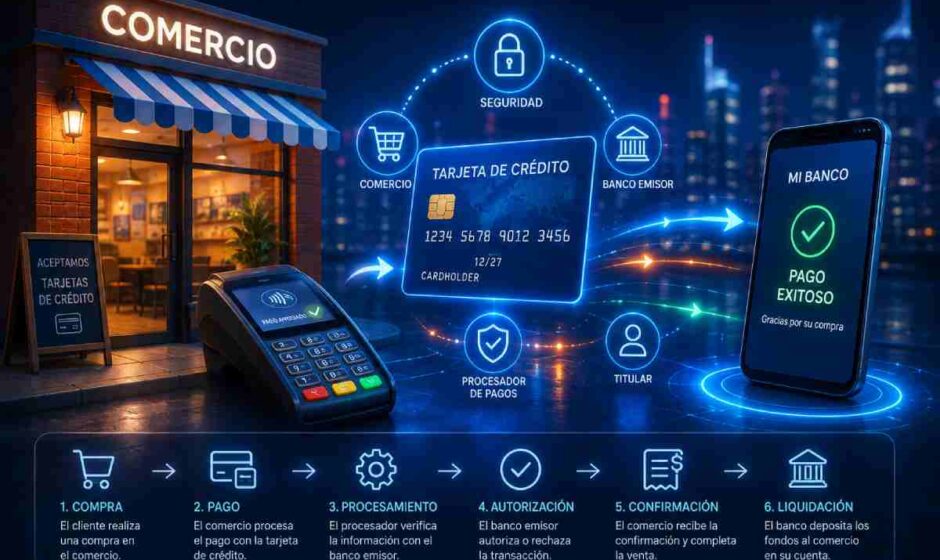

Any time you swipe, insert, tap, or type your credit card number to process a payment, you’re activating a complex system of organizations and computers that operate beneath the surface. Although the purchase may only be complete within a few seconds there are banks, networks, processors, security systems and other entities involved in getting approval, or rejection. Learning how merchants and credit cards work benefits consumers (understand payment processes, their financial security) and businesses (learn more about accepting payments, rates, fraud, settlement).
There is no doubt that online credit card payments will take over global markets – today, the same secure global network powers millions of credit card purchases each day – every single transaction that you process, whether through a merchant, a POS system, or an online checkout process.
In this guide you’ll find an explanation of the full payment transaction flow, the organizations in it, security, the fees they generate, the advantages, and the risks of using and/or accepting credit cards.
What Is a Merchant?
Definition
Any individual or entity selling a product or service with the receiving payment from customers are known as a merchants.
Merchants may operate through:
- Physical retail stores
- Online stores (eCommerce)
- Restaurants
- Hotels
- Hospitals
- Supermarkets
- Subscription services
- Mobile applications
- Service-based businesses
A merchant’s primary goal is to provide products or services while offering customers secure and convenient payment options.
What Is a Credit Card?
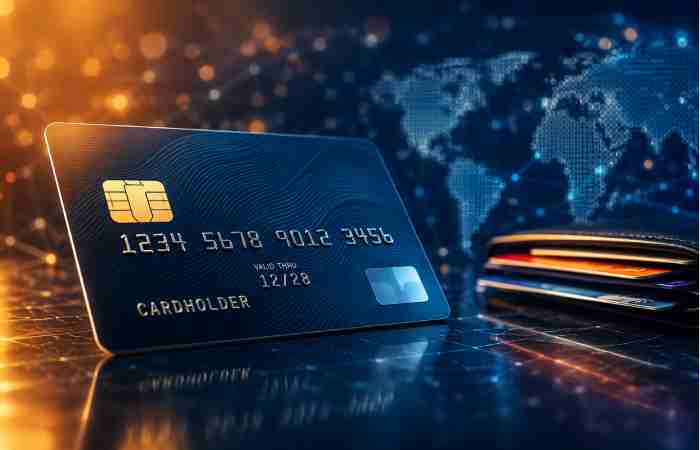
A credit card is a financial tool for payment. The bank or financial organization that issues the card agrees to extend credit up to a certain limit that the user can borrow to purchase things.
When a cardholder makes a purchase with a credit card, the bank temporarily covers the cost of the purchase instead of the cardholder paying the money immediately from their account. The cardholder then makes payments for the borrowed money in installments according to the payment cycle set by the bank.
Credit cards are popular as they offer consumers flexibility in purchasing, fraud protection, various rewards programs, and the potential to build a credit history by responsible use.
Main Components of a Credit Card
| Component | Purpose |
| Card Number | Identifies the account |
| Cardholder Name | Identifies the owner |
| Expiration Date | Indicates card validity |
| CVV Security Code | Helps verify transactions |
| EMV Chip | Enhances payment security |
| Contactless NFC Chip | Enables tap-to-pay transactions |
| Magnetic Stripe | Traditional payment method |
How Merchants and Credit Cards Work
Every credit card transaction follows a structured sequence involving several financial institutions.
Step 1: The Customer Makes a Purchase
The customer selects products or services and chooses to pay using a credit card.
Payment methods include:
- Chip insertion
- Tap-to-pay (Contactless)
- Magnetic stripe
- Mobile wallet
- Online payment
Step 2: The Merchant Sends the Payment Request
Payment Details are captured through either the merchant’s Point-Of-Sale (POS) terminal or the online payment gateway in a secure environment.
The payment request is sent securely from your payment gateway and encrypted all the way to the acquiring bank.
Step 3: The Acquiring Bank Processes the Request
The acquiring bank receives the transaction information.
It forwards the request to the appropriate payment network based on the card brand, such as:
- Visa
- Mastercard
- American Express
- Discover
Step 4: The Payment Network Routes the Transaction
The payment network identifies the customer’s card issuer.
The request is securely routed to the issuing bank for authorization.
Step 5: The Issuing Bank Reviews the Transaction
The issuing bank evaluates multiple factors before approving the payment.
These include:
- Available credit
- Account status
- Fraud detection
- Spending limits
- Card expiration
- Transaction history
- Purchase location
If everything appears valid, the bank approves the transaction.
Step 6: Approval or Decline
The authorization reply makes the same return trip along the payment network, to the acquiring bank and finally to the merchants’ payment terminal.
The merchant receives one of three responses:
- Approved
- Declined
- Additional verification required
Step 7: Payment Settlement
The customer leaves the shop, and the product is delivered to the customer’s hands where and when the transaction is authorized by the bank for payment, but the shopkeeper receives his payment afterward. During these time,
There will be a settlement period in between this where the bank transfers payment to the shopkeeper, but charges will be deducted.
Complete Credit Card Transaction Flow
| Step | Participant |
| Customer initiates purchase | Customer |
| Payment information captured | Merchant |
| Transaction processing | Acquiring Bank |
| Transaction routing | Card Network |
| Credit verification | Issuing Bank |
| Authorization response | Issuing Bank |
| Payment confirmation | Merchant |
| Settlement | Financial Institutions |
Parties Involved in Every Transaction
Customer
The individual purchasing goods or services using a credit card.
Merchant
The business accepting payment in exchange for products or services.
Issuing Bank
The financial institution that issues the customer’s credit card and provides the credit line.
Acquiring Bank
The bank responsible for processing payments on behalf of the merchant.
Payment Network
Payment networks facilitate communication between banks.
Examples include:
- Visa
- Mastercard
- American Express
- Discover
Payment Processor
A payment processor securely transfers transaction information between merchants, acquiring banks, payment networks, and issuing banks.
What Is a POS Terminal?
Definition
A Point-of-Sale (POS) terminal is the hardware or software used by merchants to accept electronic payments.
POS systems may include:
- Traditional countertop terminals
- Mobile card readers
- Smart POS devices
- Self-service kiosks
- Mobile payment applications
Modern POS systems often integrate inventory management, sales reporting, customer analytics, and payment processing into a single platform.
Types of Merchants
| Merchant Type | Example |
| Retail Store | Grocery Store |
| Online Store | eCommerce Website |
| Restaurant | Dining Establishment |
| Hotel | Hospitality Business |
| Marketplace | Amazon, Etsy |
| Service Business | Consulting Firm |
Benefits for Merchants
Accepting credit cards offers numerous business advantages.
Increased Sales
Customers often spend more when paying with credit cards.
Improved Customer Experience
Fast and convenient payments encourage repeat business.
Reduced Cash Handling
Less cash reduces theft risks and simplifies accounting.
Online Sales Opportunities
Businesses can expand into eCommerce.
Better Financial Tracking
Electronic payments create accurate sales records.
Global Customer Reach
Businesses can accept payments from international customers.
Benefits for Consumers
Credit cards provide several financial advantages.
- Convenient purchasing
- Flexible payment options
- Emergency spending capability
- Rewards programs
- Cashback offers
- Travel benefits
- Fraud protection
- Purchase protection
- Credit history building
- International payment acceptance
Credit Card vs Debit Card
| Feature | Credit Card | Debit Card |
| Uses borrowed money | Yes | No |
| Requires bank balance | No | Yes |
| Builds credit history | Yes | Usually No |
| Interest charges | Possible | No |
| Installment payments | Often Available | Limited |
| Spending limit | Credit Limit | Account Balance |
What Is a Credit Limit?
A credit limit represents the maximum amount a cardholder may borrow using the credit card.
Example:
Credit Limit:
$8,000
Current Purchase:
$1,250
Remaining Credit:
$6,750
As payments are made, the available credit becomes accessible again.
Understanding the Monthly Statement
Every billing cycle, the card issuer sends a statement summarizing account activity.
It typically includes:
- Purchase history
- Payments received
- Interest charges
- Fees
- Payment due date
- Minimum payment
- Remaining credit
- Current balance
Reviewing statements regularly helps detect errors and fraudulent transactions.
How Banks Make Money from Credit Cards
Banks generate revenue through several sources.
| Revenue Source | Description |
| Interest Charges | Applied to unpaid balances |
| Annual Fees | Charged for certain card types |
| Late Payment Fees | Penalties for missed payments |
| Merchant Interchange Fees | Portion of merchant processing fees |
| Foreign Transaction Fees | Charges for international purchases |
Why Merchants Pay Processing Fees
Every credit card transaction involves a processing fee paid by the merchant.
These fees cover:
- Payment authorization
- Transaction processing
- Fraud prevention
- Card network operations
- Banking infrastructure
- Security technology
- Customer protection services
Although merchants pay these fees, accepting credit cards often increases overall revenue by attracting more customers.
Credit Card Security Features
Modern payment systems include advanced security technologies.
EMV Chip
Creates unique transaction codes that significantly reduce card cloning.
Tokenization
Replaces the actual card number with a temporary digital token during payment.
Encryption
Protects sensitive payment information while it travels across financial networks.
CVV Verification
Adds an extra security layer for online purchases.
Multi-Factor Authentication
Many banks require one-time passwords (OTP), biometric verification, or banking app approval for additional protection.
AI Fraud Detection
Artificial intelligence monitors unusual spending behavior and can automatically block suspicious transactions.
Common Credit Card Risks
Despite strong security measures, risks still exist.
Common threats include:
- Phishing emails
- Fake shopping websites
- Card skimming
- Identity theft
- Account takeover
- Malware attacks
- Lost or stolen cards
Consumers should monitor transactions regularly and report suspicious activity immediately.
Best Practices for Merchants
Businesses should follow these recommendations:
- Use PCI-compliant payment systems.
- Keep payment software updated.
- Train employees on fraud prevention.
- Verify suspicious transactions.
- Use secure payment gateways.
- Protect customer payment information.
- Enable fraud monitoring tools.
Best Practices for Credit Card Users
Responsible card usage helps maintain good financial health.
Recommended practices include:
- Pay your balance on time.
- Avoid carrying large balances.
- Never share your CVV.
- Enable transaction alerts.
- Monitor monthly statements.
- Shop only on secure websites.
- Use strong passwords for online banking.
- Report lost cards immediately.
- Keep your credit utilization below 30%.
Common Credit Card Mistakes
| Mistake | Consequence |
| Paying only the minimum | Higher interest costs |
| Missing payments | Late fees and credit score damage |
| Sharing card information | Increased fraud risk |
| Maxing out credit limit | Lower credit score |
| Ignoring statements | Fraud may go unnoticed |
| Using unsecured websites | Increased theft risk |
Emerging Trends in Digital Payments
The payments industry continues to evolve rapidly.
Key innovations include:
- Contactless payments
- Digital wallets
- Buy Now, Pay Later (BNPL)
- Artificial intelligence fraud detection
- Biometric authentication
- Mobile payment apps
- Embedded finance
- Instant payment settlement
- Blockchain-based payment technologies
- Tokenized payment ecosystems
These technologies aim to improve payment speed, convenience, and security for both consumers and merchants.
Conclusion
Learning how a merchant and the associated credit cards work, can offer an impressive overview into the functioning of arguably one of the most common systems of payment that we have globally, that consists in a series of well coordinated steps to be taken in each and every payment: Customer, merchant, payment processor, acquiring bank, payment network and issuing bank,the process that makes a purchase with cards possible. Within seconds, these organizations work together to verify the transaction, protect sensitive financial information, and ensure that payments are processed securely.